
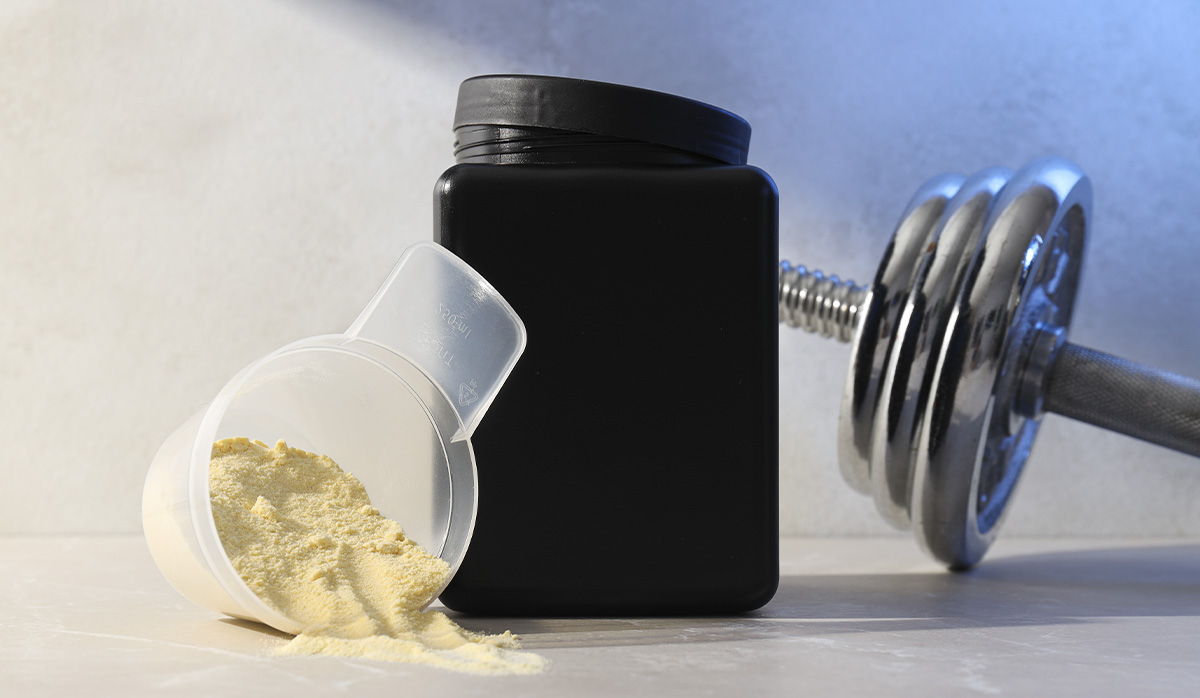
Creatine is one of the most studied and widely used supplements in the world of fitness and sports. It is known for its potential to improve strength, performance, and muscle mass development. But what exactly is it, how does it work, and how should it be taken correctly?
What is creatine?
Creatine is a natural substance found mainly in skeletal muscles, where it helps produce energy during short and intense exercises such as weightlifting or sprinting. It can also be taken as a supplement, usually in the form of creatine monohydrate, which is safe and well studied.
Why it matters for muscle mass
Creatine helps to:
- Increase phosphocreatine stores in muscles, allowing you to perform more repetitions and train with greater intensity.
- Promote muscle hypertrophy, as it stimulates protein synthesis and increases the intracellular volume of muscles.
- Reduce fatigue during intense training, allowing for longer and more productive sessions.
- Support recovery, by limiting exercise-induced muscle damage.
How to take it
To achieve optimal results, creatine can be taken using two main strategies:
1. Loading and maintenance phase
- 20 g per day divided into 4 doses for 5–7 days (loading phase)
- 3–5 g per day in the following weeks (maintenance phase)
2. Constant intake
- 3–5 g per day without a loading phase, effective but slower in increasing muscle stores.
It is important to take creatine with water or sugary drinks, as insulin can help transport it into the muscles.
Who can benefit?
Creatine is recommended for:
- Those who practice strength training or short, intense endurance exercises.
- Those who want to increase muscle mass in combination with a proper diet and regular training.
- Athletes of all ages, provided they do not have kidney conditions and under medical supervision if necessary.
Myths to debunk
- Creatine is not an anabolic steroid and does not replace training and nutrition.
- It does not cause kidney damage in healthy individuals if taken at recommended doses.
- It does not make you fat in terms of body fat: it may cause initial weight gain due to water retention in the muscles.
Conclusion
Creatine is an effective and safe supplement for those who want to increase strength and muscle mass, improve performance, and support recovery. The key is to combine it with proper training and a balanced diet. It is not a magic solution, but a valuable ally to help you achieve your fitness goals in a scientific and sustainable way.
Bibliography
- https://www.my-personaltrainer.it/integratori/effetti-creatina.html
- https://www.humanitas.it/enciclopedia/integratori-alimentari/creatina/
- https://www.farmae.it/magazine/fitness/creatina-sviluppo-muscolare/
- Kefood – Guida completa alla Creatina Monoidrato: cos'è, benefici e dosaggio
- https://www.health.harvard.edu/exercise-and-fitness/what-is-creatine-potential-benefits-and-risks-of-this-popular-supplement
- https://my.clevelandclinic.org/health/treatments/17674-creatine
- https://www.sifweb.org/sif-magazine/articolo/creatina-benefici-rischi-e-verita-scientifiche-2025-04-10
- https://pubmed.ncbi.nlm.nih.gov/37432300/
- https://www.mdpi.com/2072-6643/17/6/1081
- https://www.sciencedirect.com/science/article/abs/pii/S0899900722002040